Gear Checklist for Your First Gig: What to Pack and What to Leave Home

On this page
Why Packing Right Matters
Under-packing means a dead battery or a missing cable can stall your set before it starts. Over-packing means more trips through a crowded venue, a cluttered stage, and gear that never leaves its case. This checklist assumes a supported show at a small venue with a house PA (the venue’s own sound system and engineer), not a self-produced event.
Essentials by Role
Guitarist
- Main guitar, tuned before you leave home
- Backup guitar, or at least a spare set of strings
- Amp (confirm first whether the venue supplies one)
- Two instrument cables (the 1/4” kind), one spare
- Clip-on or pedal tuner
- Pedalboard with its power supply
- Short patch cables for the board
- Picks, strap, and capo
Bassist
- Bass, tuned and ready
- Two instrument cables, one spare
- Amp or amp head (confirm first whether the venue supplies one)
- Tuner
- Strap and picks, if you use them
- Spare strings
- Fresh 9V battery if your bass has active electronics
Drummer
- Snare drum
- Kick pedal and hi-hat clutch (the clamp that holds the top hi-hat cymbal)
- Cymbals in a padded bag
- Sticks, at least 3 pairs
- Drum key for tuning and hardware
- Throne (drum stool)
- Small rug to keep the kit from creeping
- Full kit and hardware, only if the venue doesn’t provide a shared one
Keys
- Keyboard and sturdy stand
- Power adapter, tested before you leave
- Sustain pedal
- Two instrument cables, one spare
- Stereo pair of cables if your keyboard has left and right outputs
- Sheet music or a patch list, with a stand light if needed
Vocalist
- Your own mic, if you prefer one (the venue will have house mics)
- Mic clip, if you bring your own mic
- Lyric sheets or a setlist copy
- Water bottle
- Throat lozenges or tea
- In-ear monitors and cable, if you use them
Shared Gear
Agree on who brings what so you don’t end up with four power strips and no tape.
- Power strips and extension cords, at least 2
- Gaffer tape (strong, low-residue cloth tape for taping down cables)
- Spare batteries (9V and AA)
- DI boxes (a DI, or Direct Inject, box converts an instrument signal into one a mixer can use)
- Spare instrument and XLR cables (the three-pin kind used for mics)
- Printed setlists, one per person plus one for the engineer
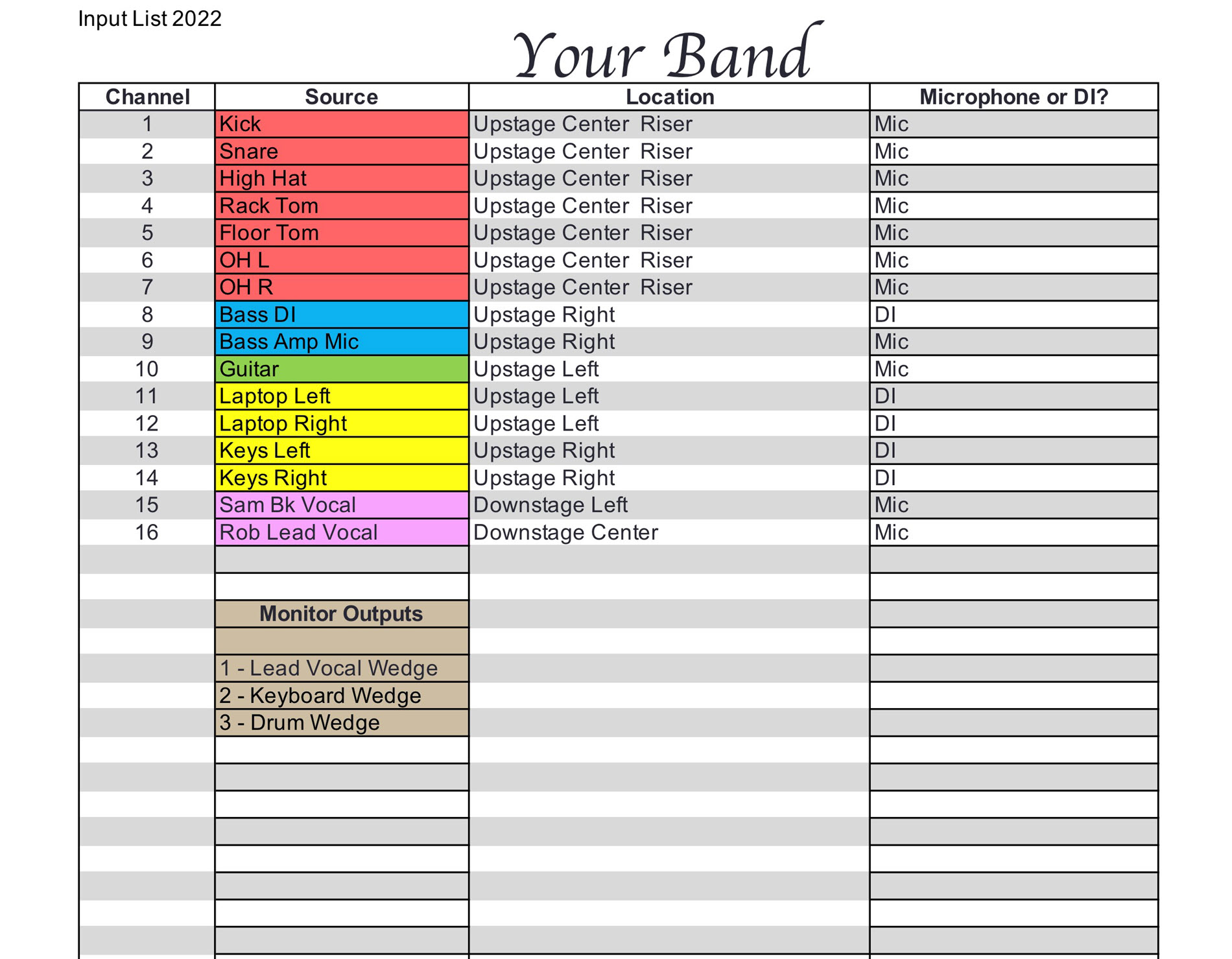
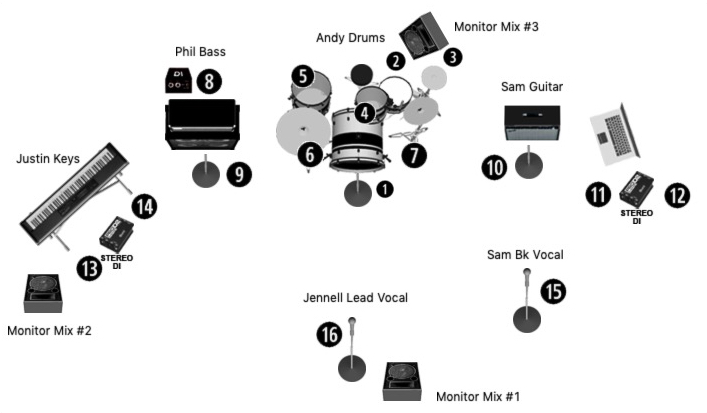
- Printed input list and stage plot (see below)
- Earplugs
- Marker and pen
An input list shows every source that needs to reach the PA, its mixer channel, and whether it uses a mic or DI. A stage plot is a simple drawing of where everyone stands. A house engineer who doesn’t know your band can use both to set up faster. A spreadsheet and a hand-drawn sketch are both fine.
 Via hub.yamaha.com
 Via hub.yamaha.com
What Most Venues Already Provide
Most small venues supply the following, but policies vary, so confirm ahead of time.
- PA system and a sound engineer
- Vocal mics, mic stands, and XLR cables
- Stage monitors (the speakers that face you so you can hear yourself)
- Basic stage power
- Drum mics
- Shared backline (stage amps and drums), if offered: confirm exactly what
- Number of DI boxes available
- Load-in time, soundcheck time, and set length
- Parking or unloading area
What to Leave Home
For a supported show at a small venue, you rarely need these.
- Your own PA speakers and mixer
- Extra amps or large speaker cabinets
- Full pedal collection (bring only what’s on tonight’s board)
- Extra guitars beyond one backup
- Mic stands for vocals, unless the venue says otherwise
- Lighting rigs and fog machines
- Studio or recording gear
- Second drum kit or a full set of extra cymbals
Load-In Order
Plan to arrive early. It gives you time to test your gear and make sure all cables and connections work before things get busy.
- First: input list and stage plot, handed to the engineer
- Next: power strips, gaffer tape, cables, and DI boxes, so the stage is wired and powered before gear arrives
- Then drums and bass, since the drummer needs time to settle in before mics go up
- Then guitar amps and keyboard rigs
- Then pedalboards, guitars, and small items
- Last: personal items such as water and lyric sheets
- Before you leave: sweep the stage for dropped picks, cables, and batteries
Sources
Title: Tools of the Trade: Seven Ways to Ensure a Smooth Sound Check Author: Steve La Cerra Publisher: Yamaha Music (hub.yamaha.com)