How to Write a Setlist: Pacing, Flow, and What to Put Where

On this page
Why Setlist Order Matters
Choosing your best songs is only half the job. The order you play them in decides whether a room stays with you or drifts back to their phones and drinks. A great song placed at the wrong moment can fall flat, and a decent song placed well can feel like a highlight.
A setlist is the written running order of songs for a performance. For a first show, the goal is simple: give the audience a shape they can follow, with a clear start, a few high points, some room to breathe, and a finish that feels earned.
Opening Strong
The first song sets the terms for the whole night. Three things matter most.
Energy. Pick something with a clear pulse and enough drive to announce that the show has started. It doesn’t need to be your fastest or loudest song. Tempo (the speed of the music, usually measured in beats per minute) should be mid-to-upbeat so the room feels momentum right away.
Familiarity. This means familiarity for you, not just the audience. Choose a song your band can play almost in your sleep. The first minutes of a show are when nerves are highest and sound problems are most likely, so don’t open with your most technical piece or one you only learned last month.
Confidence. A song with a strong, simple intro lets everyone lock in together. Intros and outros are your first and last impressions, so rehearse them on their own. Starting and ending each song cleanly does a lot of work for a new band.
If you play a mix of originals and covers, a well-known cover in the second or third slot can pull in people who don’t know your material yet. Opening with one is fine too, as long as it fits the energy goal.
Building and Releasing Tension
Think of your set as a shape, not a list. Audiences respond to contrast. If every song sits at the same intensity, the set feels flat even if each song is good.
- Peaks are high-energy moments: your most danceable, loudest, or most singalong songs.
- Valleys are lower-intensity moments, like a ballad, a stripped-down arrangement, or a groove-based song. They give the audience (and your hands and voice) a rest.
- The big moment is the high point of the whole set, the song you want people to remember. It usually works best about two-thirds to three-quarters of the way through, not at the very start.
Release matters as much as tension. A quiet song after two loud ones makes the next loud one hit harder. Change the feel, too: tempo, key (the home note and scale a song is built around), and dynamics (how loud or soft you play) are all tools. Putting two songs in the same key and tempo back to back is a quiet way to lose people.
Endings
Your final song should be one of your strongest, but “strongest” doesn’t just mean fastest. It should have a decisive ending the band can land together, ideally one you’ve rehearsed until it’s automatic. Avoid songs that fade out or trail off.
Encores. An encore is an extra song played after the set because the audience asked for more. At bars and small clubs, a dramatic walk-off and return can feel awkward. A practical approach is to prepare one extra song, ideally one you haven’t played that night, and play it only if the room clearly wants it and the venue’s schedule allows. Don’t count on it, and don’t fake it. If time is up, a sincere thank-you and a clean exit is better.
Practical Tips
Transitions. Rehearse the gaps between songs, not just the songs. Decide in advance who speaks, whether songs run straight into each other, and who counts in the next one. Working through section-to-section transitions in rehearsal pays off live, and the same applies to song-to-song changes.
Tuning and gear changes. Stringed instruments drift, and swapping guitars or capos takes time. Group songs that need the same tuning or instrument together, and schedule necessary changes at the valleys. When someone has to tune, have another bandmate say a few words, introduce the next song, or thank the venue. Dead silence makes a 30-second tuning break feel like five minutes.
Set length. For a first show in a bar or small club, 30 to 45 minutes is a sensible target. Most venues book several acts in a night and expect you to stay on schedule. Ten songs at roughly 3.5 to 4 minutes each is about 35 to 40 minutes before talking and tuning, so check your timing against your actual slot. Leaving people wanting more is better than overstaying.
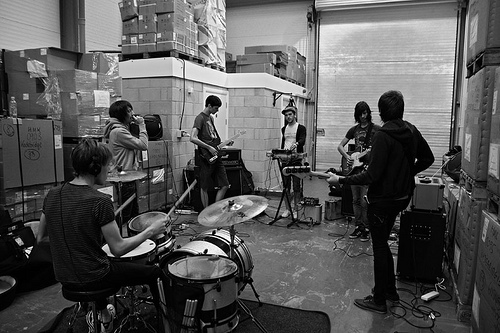
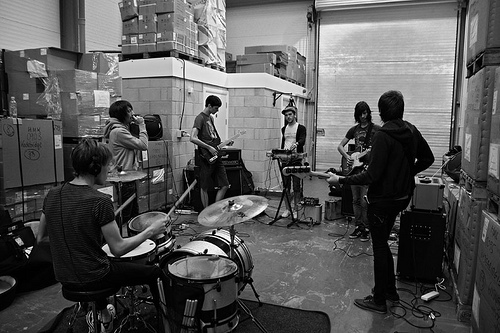
Rehearse the full set in order. Run it front to back, with transitions, as if it were the show. Rehearsal guidance for bands recommends a dedicated block for exactly this, combining your transitions, intros, and outros into your ideal set. Bring a printed setlist, large enough to read in dim light, and tape one copy by each player.
 Via blog.sonicbids.com
Common Mistakes
Opening with a slow song. It asks the audience to lean in before you’ve earned their attention, and it makes your own nerves more obvious. Save slower material for after the room is with you.
Ending on autopilot. By the last song, everyone is tired. If the closer is a song you barely rehearsed, or one you’ve played a thousand times without thinking, it will sound like it. Practice the ending specifically, and give the closer real intent.
Playing every song at the same tempo. Even great songs blur together at the same speed. Look down your list and check that tempos and feels vary. If three songs in a row sit around the same BPM, move one.
Cramming all the hits at the front. This leaves nothing to build toward. Spread your strongest material across the set.
Over-planning the talk. Plan who talks and roughly when, but keep it short. A scripted monologue between every song kills momentum.
A Simple 10-Song Template
Use this as a starting map and adjust to your material:
- Strong opener: familiar, mid-to-up tempo, clean intro.
- Keep it rolling: similar energy; consider a well-known cover.
- Change the feel: different tempo or groove, still engaging.
- First peak: a crowd-pleaser to show what you can do.
- Valley: your slowest or most stripped-down song. A good tuning-break spot.
- Rebuild: mid-tempo with a strong groove, bringing energy back up.
- Rising: a bigger, more intense song that points toward the climax.
- The big moment: your best, most memorable song.
- Hold the height: high energy, so the set doesn’t deflate after the peak.
- Closer: decisive, rehearsed, with a clear ending.
Keep one encore song in reserve, outside the ten.
After the show, note which songs landed and which didn’t. Then reorder for next time. A setlist improves with every performance.
Sources
How to Get the Most Out of Your Band Rehearsal in 3 Hours (or Less), Andrew Hall, Sonicbids Blog