How to Structure a Band Rehearsal That Actually Gets Things Done


On this page
Why Rehearsals Go Sideways
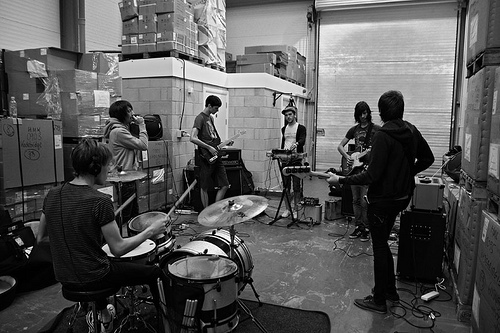
Most bands don’t plan to waste a rehearsal. It just happens. Someone’s pedal won’t power on, the drummer is still adjusting cymbals at the half-hour mark, a conversation about last weekend’s gig drifts into a conversation about everything else, and suddenly there’s 40 minutes left. The band plays its three best songs, everyone feels fine, and nothing actually improves.
That cost adds up. Every member has carved time out of work, school, or family to be there, and as Max Monahan writes on the Sonicbids Blog, a rehearsal that goes nowhere isn’t just wasted time. It’s “discouraging to everyone involved.” Do that enough weeks in a row and a band starts to lose momentum.
The fix isn’t to make rehearsal joyless. It’s to give it a shape, so the fun parts and the work parts both get their time.
 Via blog.sonicbids.com
Before You Arrive: Pick One Goal
The single most useful thing you can do happens before anyone opens a case. Decide what this session is for. Sam Friedman puts it simply in his Sonicbids piece: “Know what the point of the practice is beforehand so that you have a clear checklist of what it is you’re working on.”
Most rehearsals fall into one of three types:
- Run-through sessions. You have a gig coming up and need to play the setlist (the ordered list of songs you’ll perform) top to bottom until it feels solid.
- Problem-solving sessions. The songs are mostly there, but specific spots keep falling apart: a messy ending, a rushed bridge, a vocal harmony that drifts.
- New material sessions. You’re learning a cover or building an original from scratch.
You can mix them, but one should lead. Then send a short message to the group a day or two ahead: what you’re working on, which songs, and anything people should prepare at home. If a song is new, whoever wrote or chose it should share lyrics, charts, or a reference recording in advance so nobody is learning their part from zero in the room.
Time-Boxing a 2–3 Hour Session
“Time-boxing” just means giving each part of the rehearsal a set amount of time and moving on when it’s up. Andrew Hall’s suggested layout on the Sonicbids Blog fits a full session into three hours, including load-in and load-out. Here’s a flexible version you can adapt:
Setup (10–15 minutes). Treat it as practice for gigs, where you’ll often get very little changeover time. Hall recommends 15 minutes for load-in.
Warm-up (15–20 minutes). Something low-stakes to get hands, voices, and ears working together: a familiar song, a simple groove, a short improvisation.
Full run-throughs (30–45 minutes). Play the songs you’re focused on all the way through without stopping. Don’t fix anything yet. Just notice, and jot down where things went wrong.
Break (10–15 minutes). Friedman points out that a short break can do more for a stubborn song than playing it a few more times. Ears, fingers, and voices all get tired.
Targeted work (45–60 minutes). Go back to the spots you noted. This is where most of the real improvement happens. Pay special attention to transitions (the moments where a song moves from one section to another, like chorus into bridge) and to intros and endings. Hall calls those “your first and last impressions.”
Recap and final run (15–20 minutes). Play the worked-on songs once more in full, then spend five minutes agreeing on what improved, what still needs work, and what everyone practices at home before next time.
Assign Roles
When everybody is responsible for keeping things moving, nobody is. A few small jobs, spread across the band, keep the session on track:
- Rehearsal leader. Watches the clock and decides when to move on. This doesn’t have to be the singer or the frontperson. Friedman notes the person guiding practice often isn’t the one who leads on stage.
- Tempo keeper. Whoever counts the song in. A count-off is the “one, two, three, four” that sets the speed. If you use a click track (a metronome signal played through headphones or speakers), this person starts it. Acoustic groups can simply agree on who counts in and check tempos against a phone metronome before starting.
- Break caller. Calls the break at the planned time, so nobody plays through exhaustion or stops for 30 minutes after one song.
- Recorder. Captures run-throughs on a phone or portable recorder. Hall suggests recording every practice. Listening back later reveals things you can’t hear while playing, and you may end up with a rough demo.
Rotate the jobs if you like. Just make sure someone owns each one.
Common Mistakes to Avoid
Letting gear setup eat the session. Monahan’s first rule is to make sure your gear works before rehearsal: fresh batteries, working cables, no mystery buzz in your input jacks. Arrive early enough to set up before the agreed start time, not at it. As he puts it, “early is on time, on time is late.”
Repeating a part without fixing anything. Playing a broken section ten more times usually just practices the mistake. Stop and figure out why it’s breaking. Monahan’s approach is to loop the problem spot (play just that short section over and over) with only the players involved, fix it, then add everyone back in and drop it into the full song. If the issue is one person’s technique, it may be better worked out at home than in front of the band.
Rehearsing what you’re already good at. Playing your strongest songs feels great, and that’s exactly why bands drift toward them. Save one favorite as a warm-up or reward, and spend the bulk of your time on what isn’t ready yet.
Ignoring the less obvious problems. Not every issue is a wrong note. Monahan recommends being “hypercritical” about tempo, volume, and dynamics (how loud or soft the band plays at different moments). His tempo check needs no PA: set a metronome to the target tempo, turn it off, start the song, then stop partway and compare.
Distractions. Phones away until the break, and limit guests. Friedman notes that an audience makes people reluctant to try things and fumble, and fumbling is what rehearsal is for.
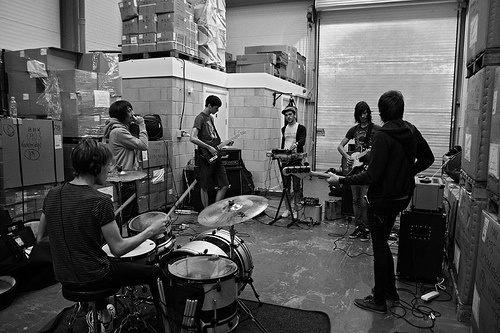 Via blog.sonicbids.com
Example: A Productive Rehearsal, Start to Finish
Picture a four-piece band with a gig in three weeks and a two-and-a-half-hour room booking starting at 7:00.
Two days before: The leader messages the group. The goal is tightening the six-song set, especially the ending of song four and the key change in song two. Everyone confirms.
6:45–7:00: Members arrive and set up. The bassist swapped in a fresh battery at home.
7:00–7:15: Warm-up on a song everyone knows cold.
7:15–7:50: Full set, no stopping. The recorder captures it. The leader notes three trouble spots.
7:50–8:00: Break, phones allowed.
8:00–8:55: Targeted work. The drummer and guitarist loop the ending of song four alone until it lands together, then the full band rejoins. The vocalist and keyboardist slow down the key change in song two, then build back up to tempo.
8:55–9:20: Full set again. The leader calls out what’s clearly better.
9:20–9:30: Recap: one remaining weak spot is assigned as home practice, and next week’s goal is agreed on. Pack up.
Nobody worked under pressure, and the band still walked out with two problems solved and a plan for the third.
Sources
How to Get the Most Out of Your Band Rehearsal in 3 Hours (or Less), Andrew Hall, Sonicbids Blog
8 Simple Ways to Make Your Band Rehearsals More Productive, Sam Friedman, Sonicbids Blog
How to Avoid the 5 Most Common Band Rehearsal Mistakes, Max Monahan, Sonicbids Blog