Who needs the click? Assign live timing cues by musical role


On this page
Note: the source text I received cuts off partway through the introduction. This rewrite builds on its stated premise: assign continuous timekeeping, count-ins, and entrance cues by musical role and song section. I haven’t added any outside data or product claims.
Who Needs the Click? Match Timing Cues to the Job Each Player Is Doing
Picture a band that already rehearses with a click (the metronome track that keeps everyone at the same tempo) and gives each player a personal monitor mix. The singer still asks where to come in. The guitarist guesses his way through a quiet intro. Nobody knows who is steering the tempo during the breakdown. Turning the click up for everyone might make the pulse easier to hear, but it doesn’t fix any of those problems. They are different timing problems, and each needs a different kind of cue.
Three Timing Jobs Hiding Under the Word “Click”
When a band says “we need the click,” it usually means one of three separate things:
- Continuous timekeeping. A steady pulse the whole way through a section, so the player can lock their playing to it.
- Count-ins. A short lead-in that tells everyone the tempo and the exact moment the song starts.
- Entrance cues. A signal that says “you, now” for someone who has been silent or waiting.
A steady pulse does nothing for a vocalist who has eight bars of rest and needs to know when bar nine arrives. A count-in at the top of the song does nothing for the keyboard player who has to come back in after a long break. Once you separate these jobs, the question changes. “Who gets the click?” becomes “Who needs which cue, and when?”
 Photo by Pavel Danilyuk / Pexels
Start With a Map of the Song
Before you assign anything, look at each song one section at a time: intro, verse, chorus, bridge, breakdown, outro. For each section, ask what every musician is actually responsible for.
Some players are carrying the groove. Some are holding long notes over it. Some are silent and waiting to enter. Some are playing something exposed, where any drift will be obvious. These roles change from section to section, so a player who needs a constant pulse in the verse may need only an entrance cue in the bridge.
A simple chart helps. Write the sections down the side and the band members across the top, then mark what each person needs in each box: continuous pulse, count-in, entrance cue, or nothing. It takes a few minutes, and it usually exposes the gaps behind those recurring arguments about timing.
Match the Cue to the Role
With the map done, assign cues according to the work being done, not according to habit or who complains loudest.
Players carrying the groove usually benefit most from a continuous reference. They are the ones whose timing everybody else leans on, so a steady pulse in their own feed makes sense. Whether that is an audible click or something else is up to your band’s setup.
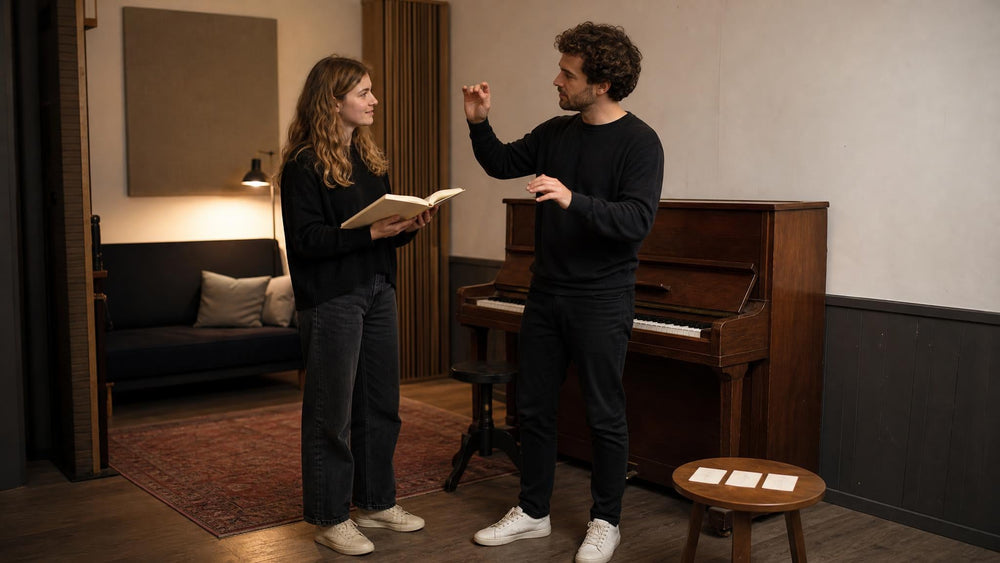
Players with long rests mostly need entrance cues. Giving them a constant pulse through a long silence isn’t necessarily useful. What helps is a clear marker that the entrance is close. That might be a spoken or tapped cue, a count, or a signal from another musician. Agree on it ahead of time so there is no guessing.
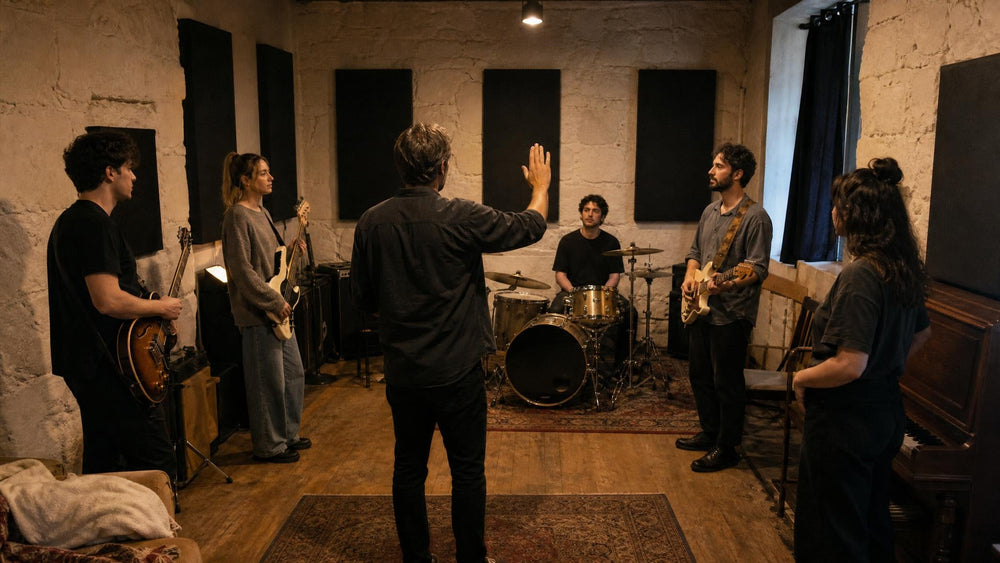
Players who start a song need the count-in. If the song begins with a solo instrument, that player should know exactly how the lead-in will be delivered and who is giving it. A count-in only works if everyone shares the same understanding of it.
Players on exposed parts, such as a quiet intro or a sparse passage, may need a continuous reference for that stretch even if they don’t need one the rest of the song. The point isn’t to give everyone the same thing. It’s to give each person what the part demands at that moment.
 Photo by Big Bag Films / Pexels
Don’t Leave Quiet and Exposed Moments to Chance
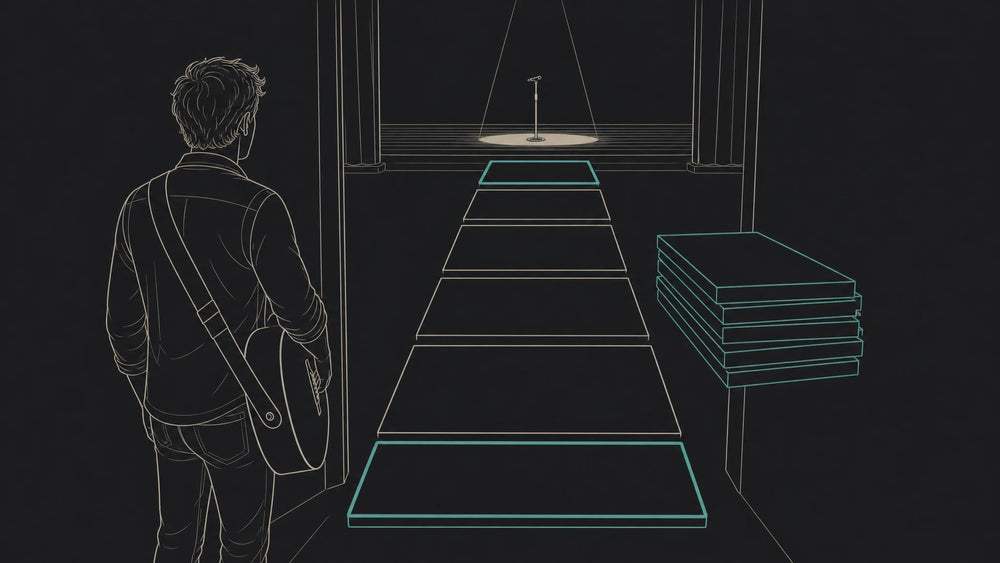
Quiet intros and breakdowns are where timing arrangements most often fall apart. When the music thins out, the cues that were built into the full-band sound disappear. Players who normally follow the groove by feel suddenly have nothing to follow.
Treat those sections as their own timing problem. Decide ahead of time:
- Who is playing in this section and who is waiting?
- Does the player in the exposed spot need a continuous pulse, or only a starting reference?
- How will the rest of the band know when the full groove returns?
If the answer to the third question is “we’ll feel it,” test that claim in rehearsal. If the band keeps missing the re-entry, that section needs an explicit cue.
Decide Who Holds the Tempo
The breakdown question from the opening, who holds the tempo, is an assignment, not a mystery. Pick a person or a source for each section where the pulse could wander. It might be the same player for the whole song, or it might change at a bridge or breakdown.
Two things make this work:
- Say it out loud. If two people both think they’re in charge of the pulse, or neither does, you’ll hear it in the music.
- Write it on the chart. A note next to the section such as “tempo: drums” or “tempo: click” takes seconds and saves rehearsal time.
This is also where continuous timekeeping and entrance cues work together. The tempo-holder keeps the pulse steady, and the players waiting to enter listen for their cue against that steady background.
Rehearse It, Then Trim It
A cue plan only counts once you’ve played it. Run each song with the assignments in place and pay attention to where the confusion shows up. If someone still asks “when do I come in?”, their cue is unclear, not absent, so make it easier to hear or see, or change how it’s delivered.
Then trim. If a player’s feed contains cues they never use, remove them. A cleaner monitor mix is easier to follow, and each cue that remains carries more weight.
Keep the chart with your setlist so it travels to every rehearsal and gig. When you add a song or rearrange a section, redo the map for that section. Timing cues are part of the arrangement, and they need updating when the arrangement changes.
The goal is for every musician to know three things: what pulse they’re following, how the song starts, and what tells them to come in. When those answers are clear for each role and section, the band spends less time asking about timing and more time playing.
Sources
Who needs the click? Assign live timing cues by musical role, www.soundbrenner.com